The brief from George
George runs an independent comic shop and arrived with a clear vision — build an online space for readers, writers, and artists. Not just a store, a neighborhood. I joined a team of three designers, led the information architecture, the product concept for The Vault's trading and live-auction features, and the homepage experience. My two collaborators focused on the Workshop section and the Scout tool.
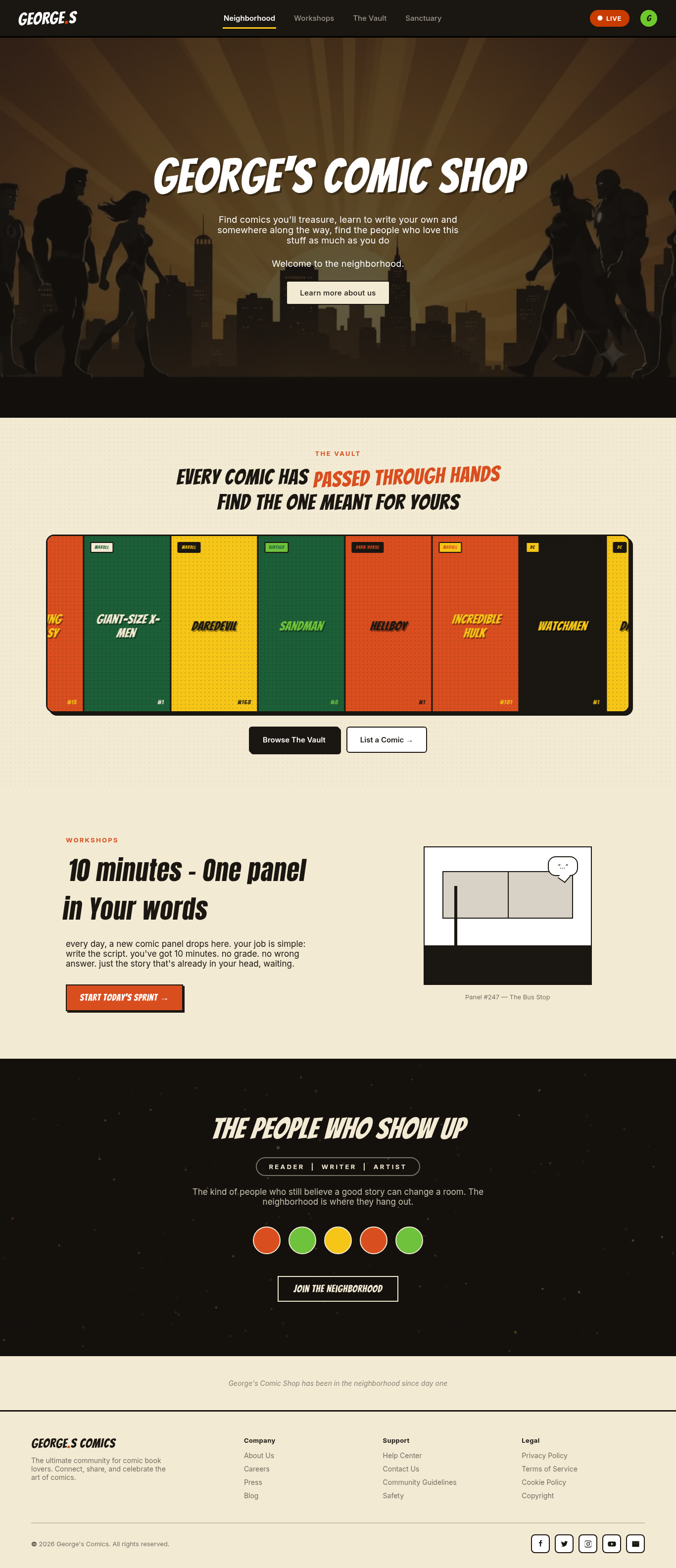
The challenge wasn't simply to digitize a comic shop — it was to preserve the excitement of discovering comics, trading with others, and feeling part of a local community.
Community over catalogue
Readers don't just want to buy; they want to belong. The whole platform had to feel like a place with regulars, not a shelf of products.
Exchange is social
Trading comics is a ritual in physical shops. No digital platform had captured that feeling of trust and mutual ownership between collectors.
Creation builds loyalty
Readers who make things, even small things, stay longer and engage more. The 10-Minute Sprint was designed around this instinct.
From a rough list to a structured IA
George arrived with a detailed IA. Ambitious in scope, but with overlapping sections and unclear hierarchy. I worked with the team to consolidate it into five clearly separated areas, removing the Watcher Bar and restructuring the Live features into a dedicated section.
The core loop, simplified
The core experience was intentionally simplified to reduce friction — from discovering comics to collecting, trading, and participating in the community. Every step in this flow was a deliberate product decision.
Two product decisions that changed everything
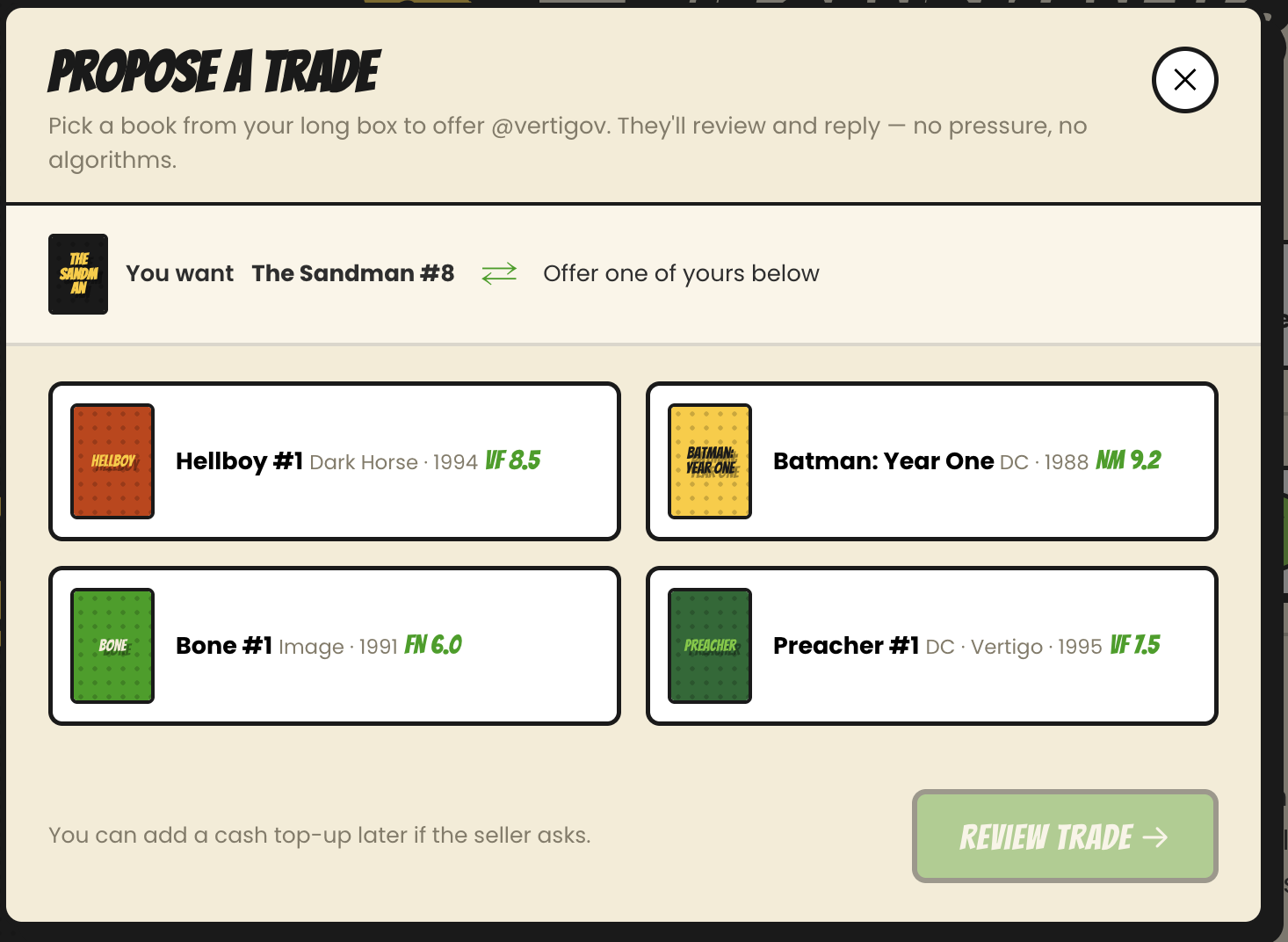
P2P Exchange
Online comic marketplaces treat selling and buying as separate, transactional acts. There's no space for the ritual of exchange between collectors.
A peer-to-peer trading system: users list a comic they own and browse what they want. The trade is proposed directly to another community member — no money changes hands.
Removing price entirely was a deliberate product decision. It signals that value here is relational, not financial — and it separates trading from purchasing as a conceptual layer, just as it feels in a real shop.
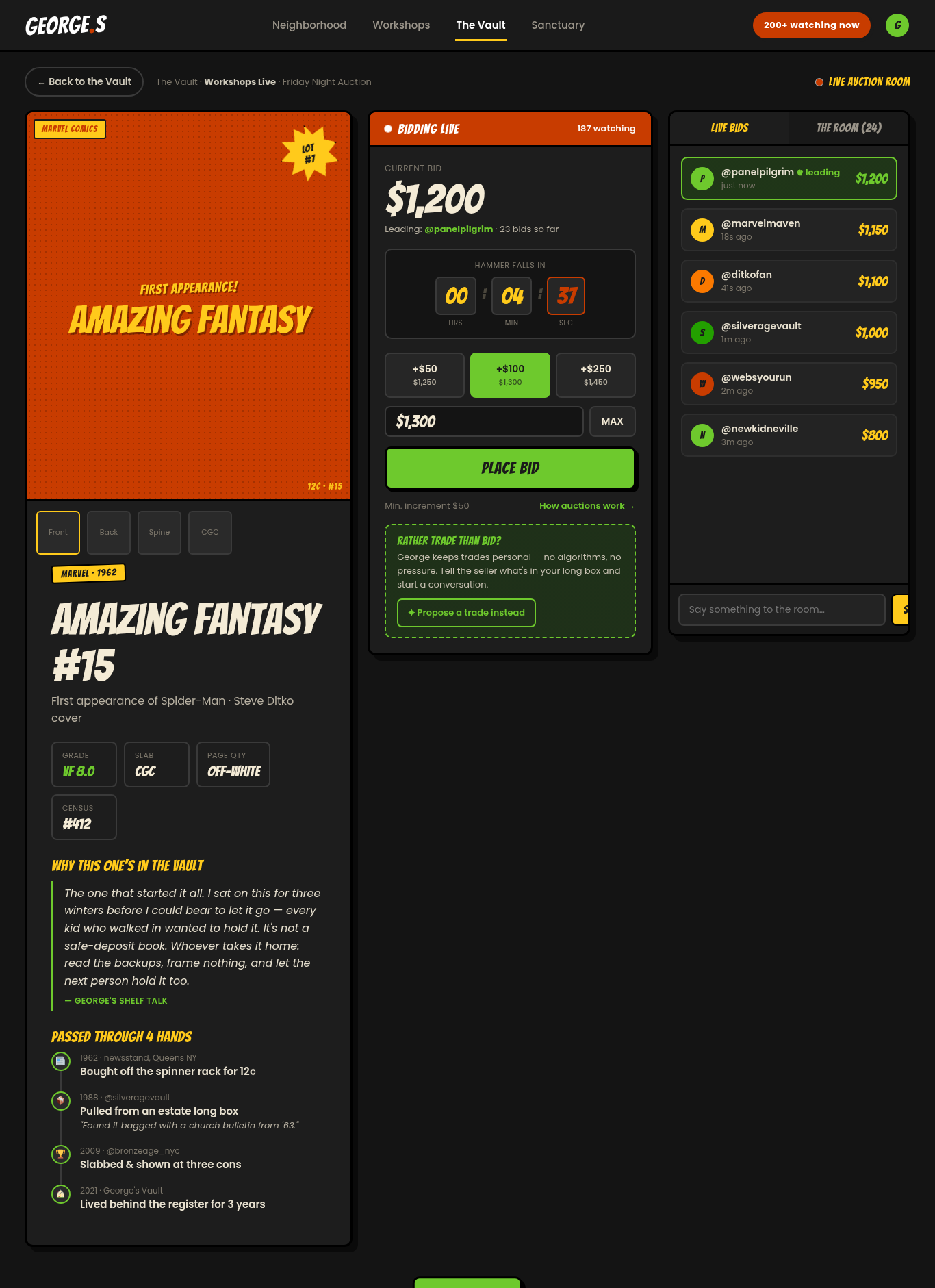
Real-time Bidding
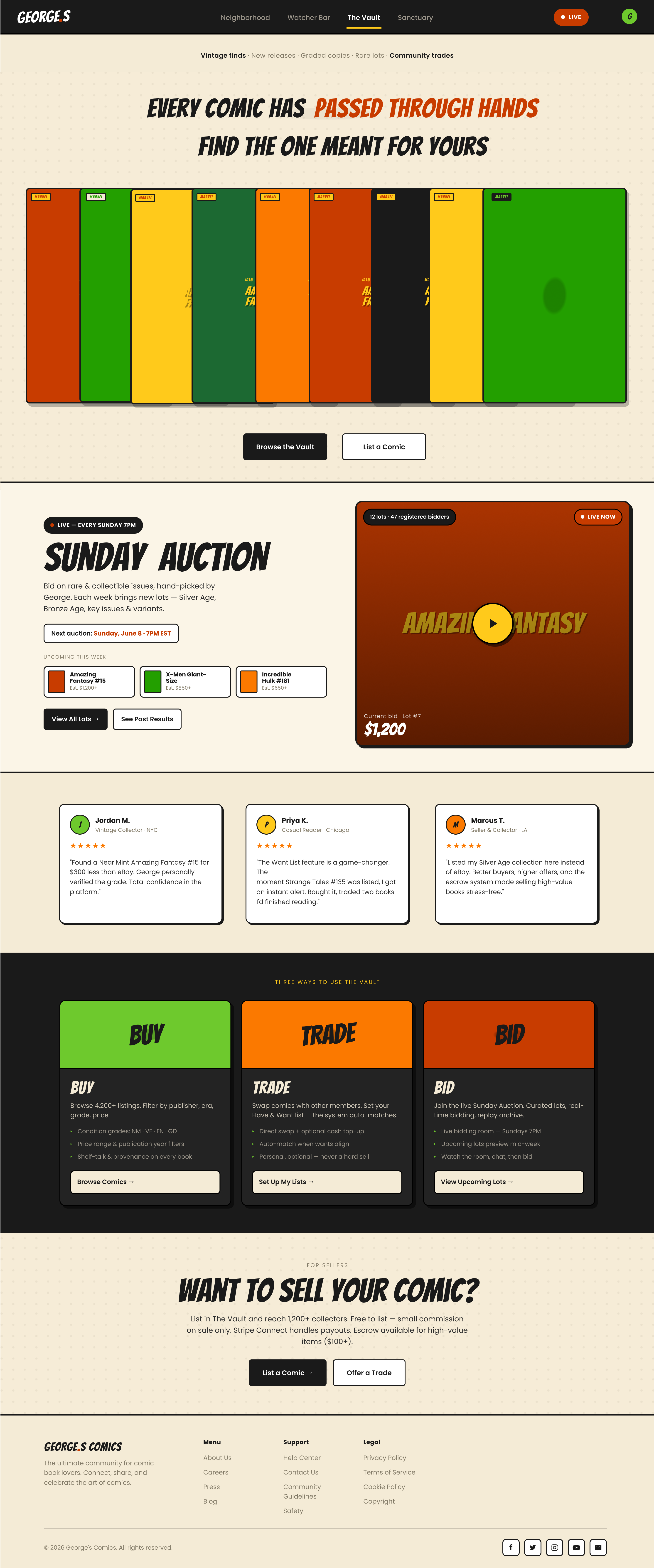
Live auctions for limited comics generate genuine excitement in physical shops — but standard e-commerce interfaces flatten that energy into an address-and-checkout form.
A live auction feature with real-time bids, an on-screen countdown, and a running bid history — designed to feel like a room full of people, not a queue.
The live design decision was how to communicate urgency without manipulation. Most auction UIs resort to aggressive red timers. I chose typographic weight and a calm countdown instead — maintaining tension while keeping the experience warm and on-brand.
Both features were designed collaboratively, hi-fi in Figma, and prototyped in HTML — and became the two most-discussed decisions with the client.
From foundation to interaction
Design System
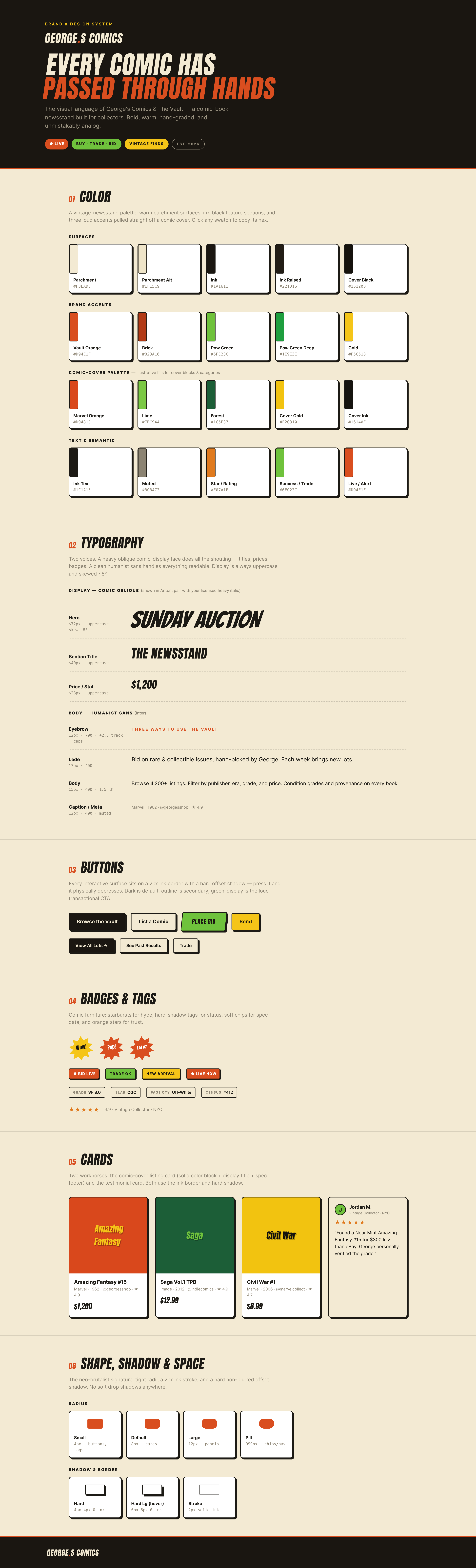
I built the visual system before touching any screen — type, color, grid, and component rules for The Vault, Live, and Neighborhood. This kept three designers consistent across every section.
Hi-Fi Design
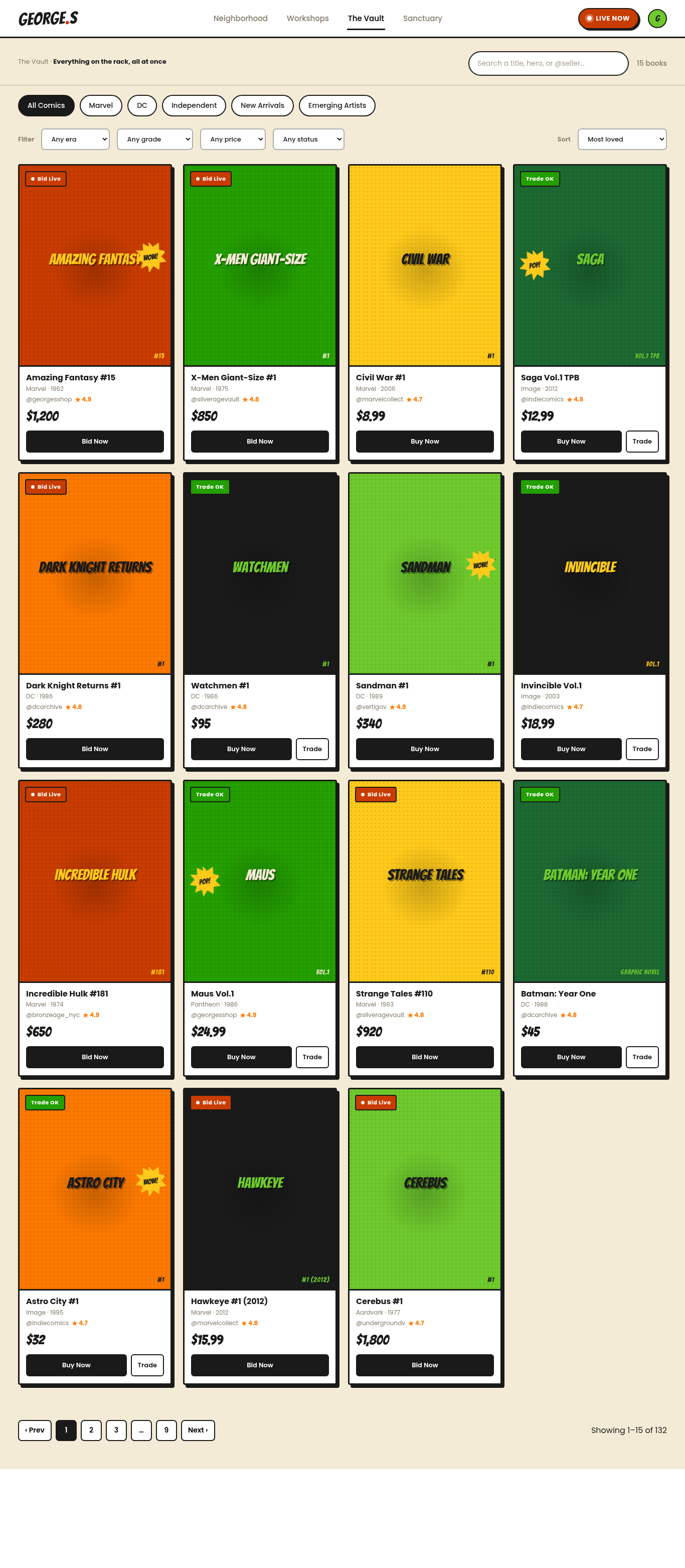
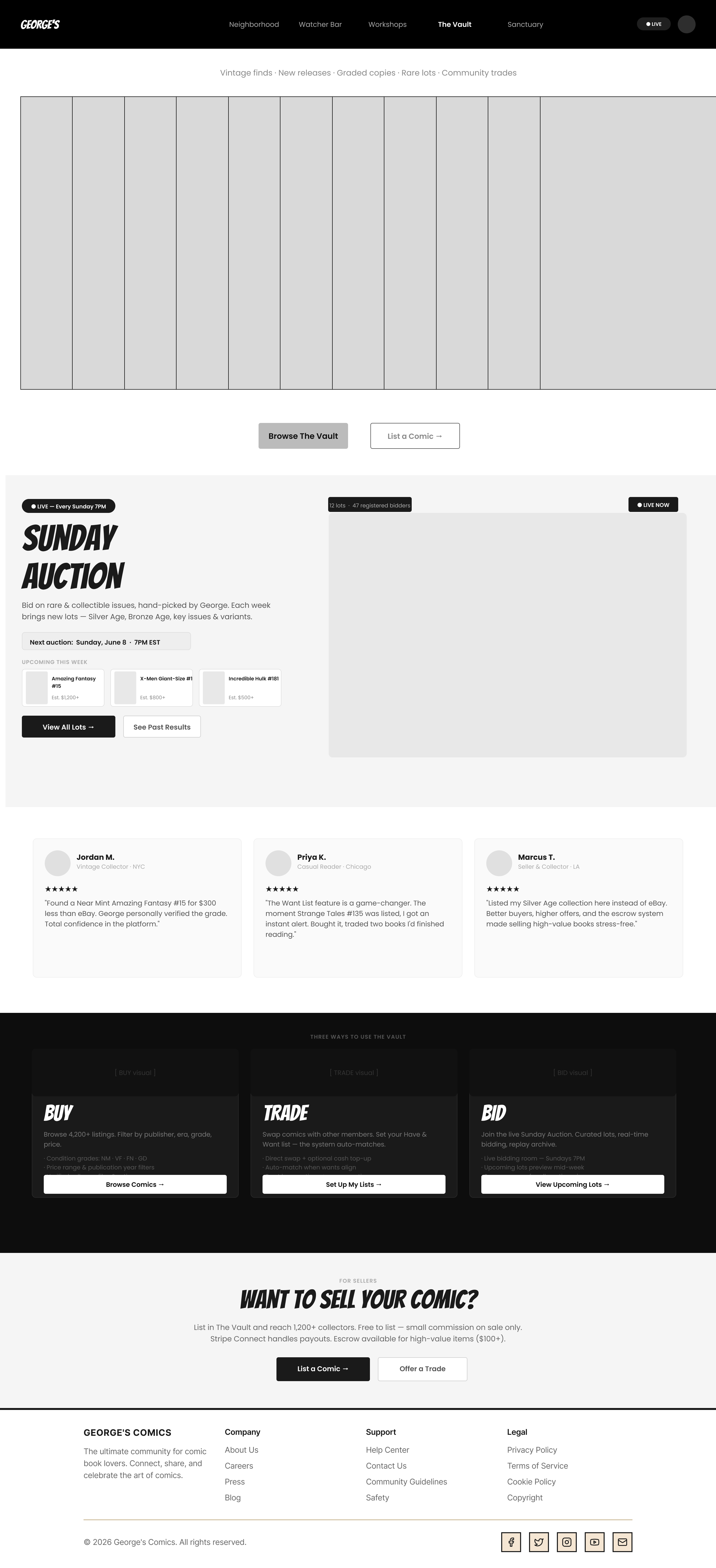
I focused on the homepage and The Vault — the two surfaces that establish trust and set the tone. Getting these right first gave the rest of the team a clear reference to follow.
Responsive Prototype
I built the flows as interactive HTML — 10+ pages — giving the client a clickable walkthrough of every major flow. This was especially important for the Live auction, where Figma couldn't capture the live feel.
Designing the core experience
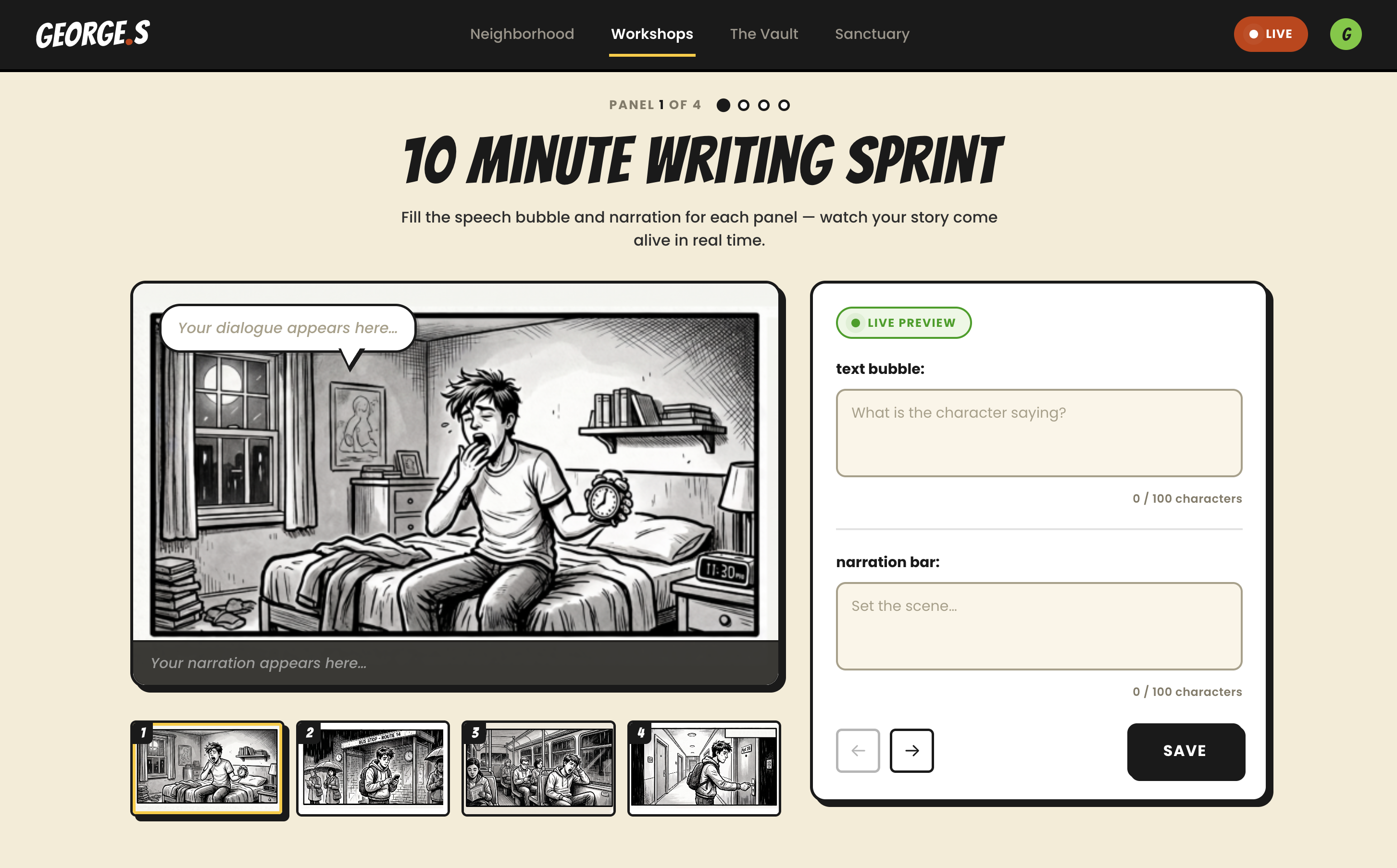
These five screens represent the core experience — from discovery to collection, trading, and community participation. Each screen had to justify its own existence in the flow.